
What a deeper look at my fitness revealed—and how it changed the way I train for the decades ahead.
By ChiChi Ubina
When Fitness Feels Familiar
I’ve been physically active for most of my adult life. In my 50s, I play squash 3-4 times a week, and by most conventional standards, I’m fit. I feel strong. I move well. I can keep up with the demands of my life. And yet, until recently, I had never asked a more fundamental question: were the activities I relied on actually preparing me for the years ahead—or simply supporting the life I live right now?
Fitness has a way of disguising its blind spots. When routines become familiar, it’s easy to mistake consistency for progress. You keep moving, you keep sweating, and nothing feels obviously wrong. Certain capacities—strength, balance, coordination, aerobic endurance—don’t announce their decline. They simply stop improving. Without measurement, you may not notice until the gap is wide.
As a single-sport athlete, I had built a body that performed well on the squash court. What I hadn’t done was step back and look at how my body functioned as a system.
Stepping Into Healthspan Discovery at The Practice
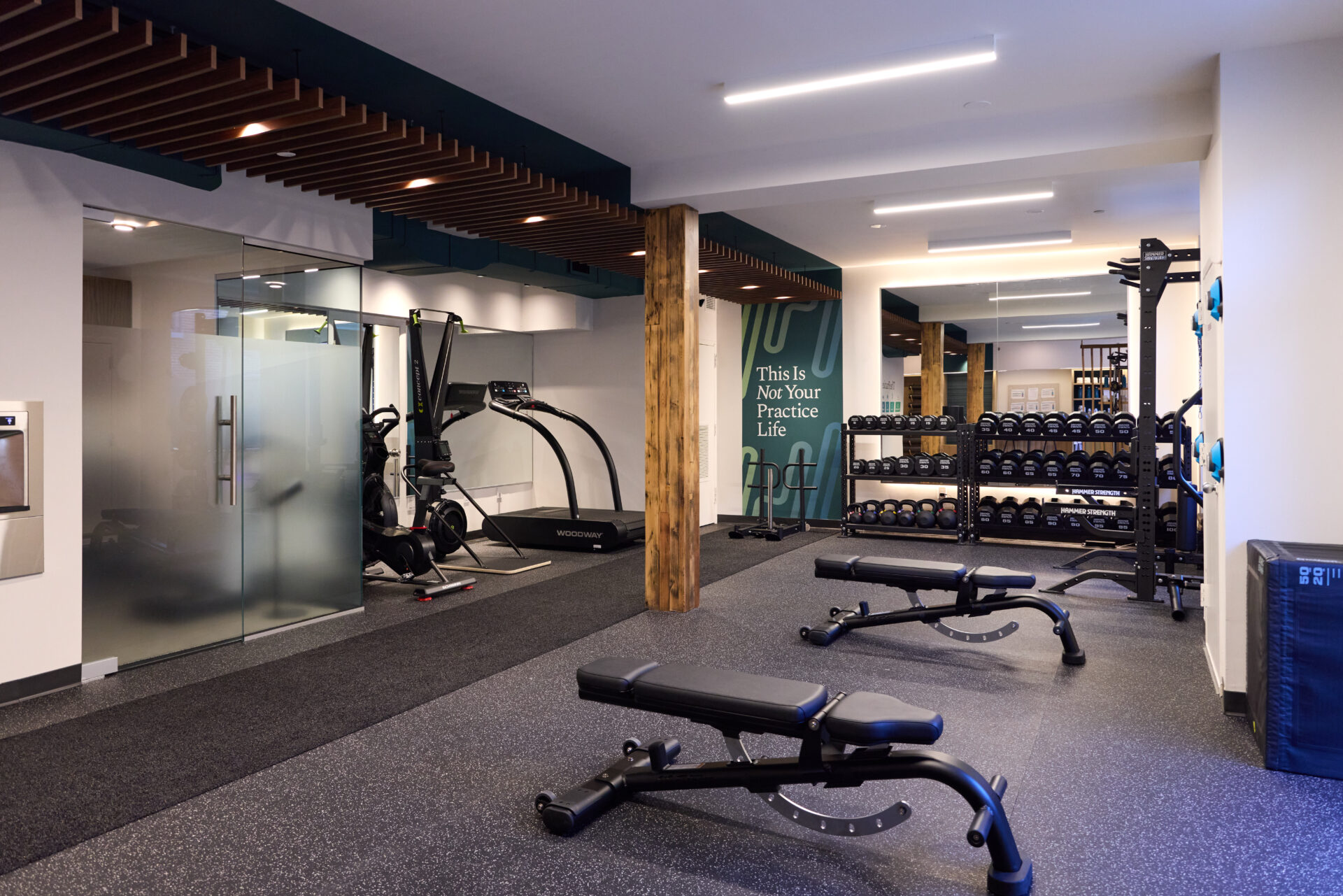
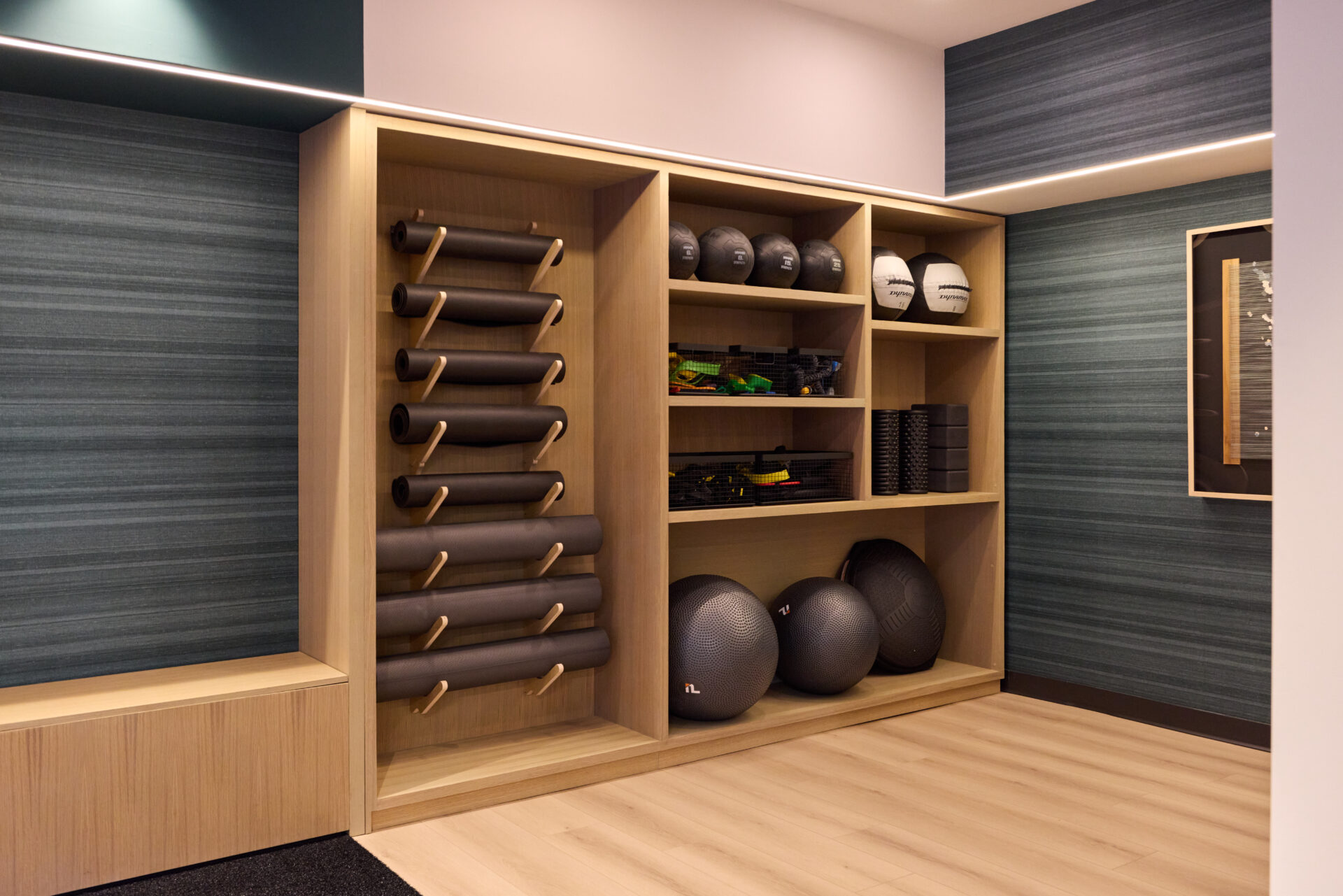
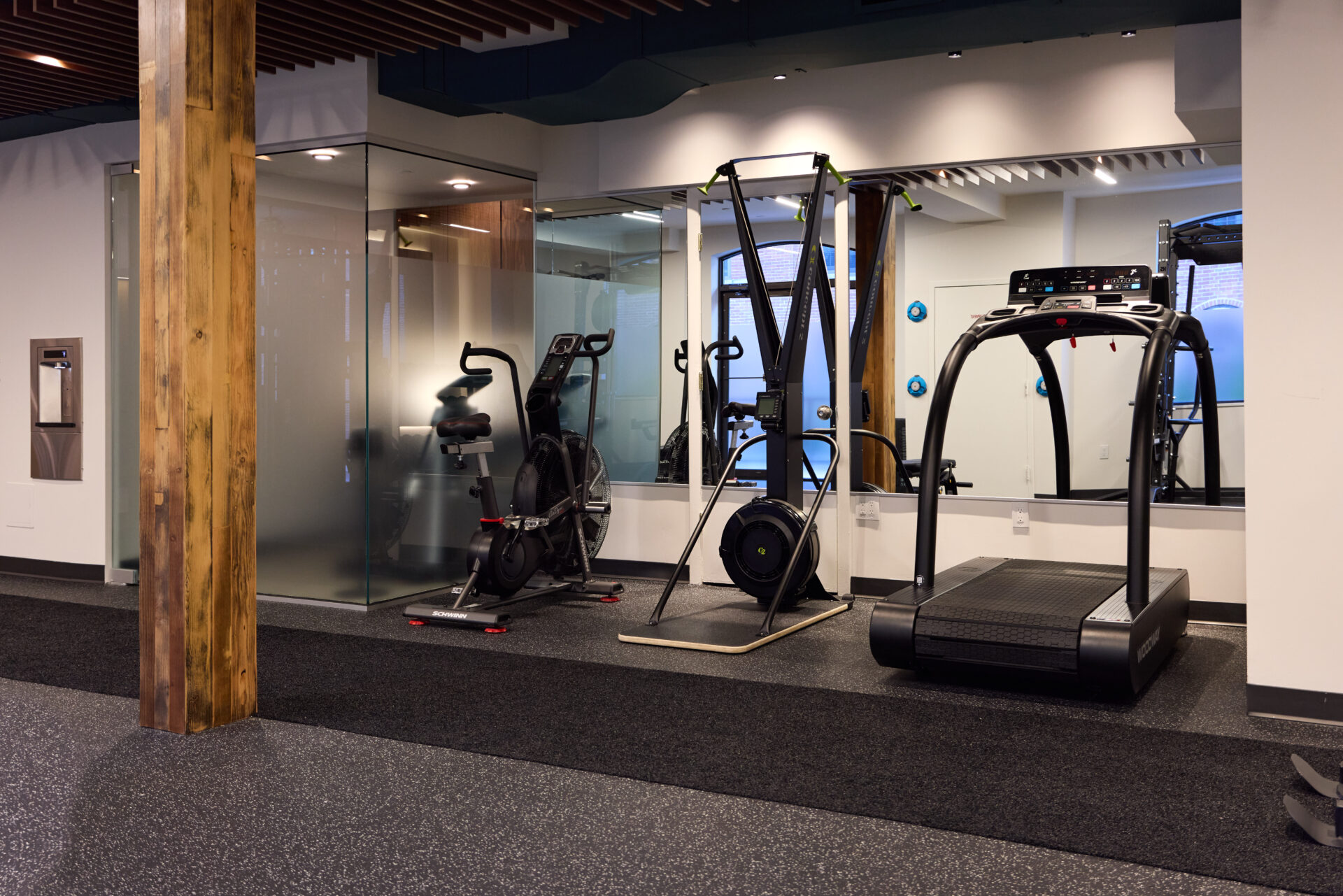
That was my mindset when I walked into The Practice for this photo shoot. It’s a new personal training studio that opened this fall at The Mill in Glenville – an emerging local wellness hub.
From the outset, it was clear this wasn’t a conventional gym. Rather than emphasizing aesthetic goals or performance shortcuts, The Practice is built around training that makes clients “stronger for longer, beginning with a thorough assessment. The coaches want to understand how a client’s body works – and what it needs – before deciding how to train it.
New clients begin with the Healthspan Discovery Package: a structured, data-driven assessment designed to establish a clear baseline. Measurements include grip strength, body composition, movement control, cognitive agility, and cardiovascular capacity—including VO₂ max. Each metric is treated not as a judgment, but as a signal—one piece of a larger picture.
What the Data Revealed
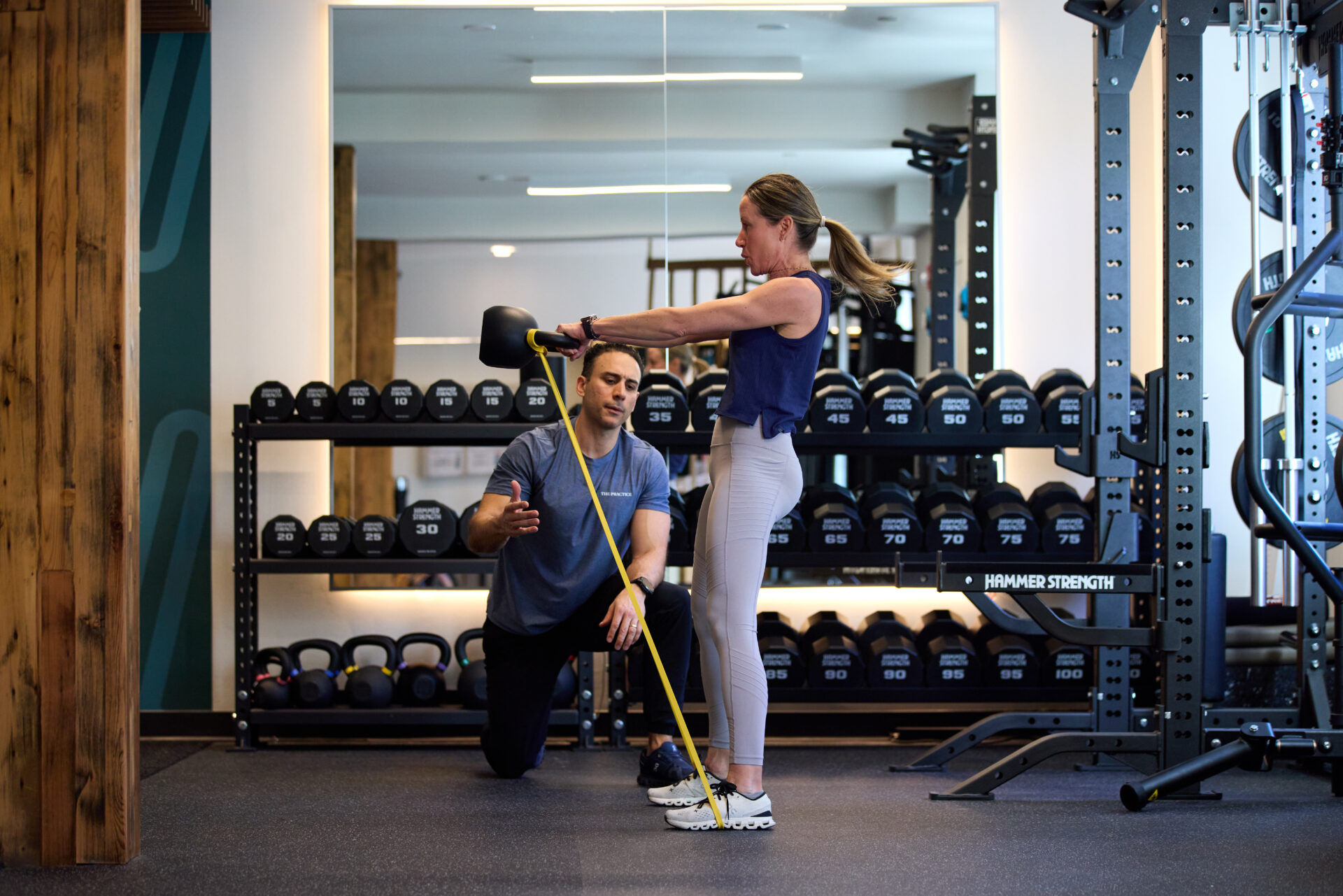
Following the shoot and witnessing the high level of detail offered, I decided to sign up for an assessment. My Healthspan Discovery sessions were led by Nick Causa, Director of Healthspan Training at The Practice. He asked about my sport, my movement history, and my habits—then observed how those choices had shaped my body over time. He was inquisitive, extremely knowledgeable, and the hour flew by.
Some results confirmed what I expected. Years of squash had built strong aerobic capacity; my VO₂ max was well above average for my age. But alongside that strength were gaps I hadn’t noticed: limitations in shoulder mobility, imbalances in strength, areas of control that had quietly diminished.
What surprised me most wasn’t the presence of weaknesses—it was how clearly they pointed toward a path forward. Once the data was visible, the priorities were obvious. I knew exactly where to focus, whether I chose to continue training independently or work with one of The Practice’s coaches.
Fitness as a System, Not a Workout
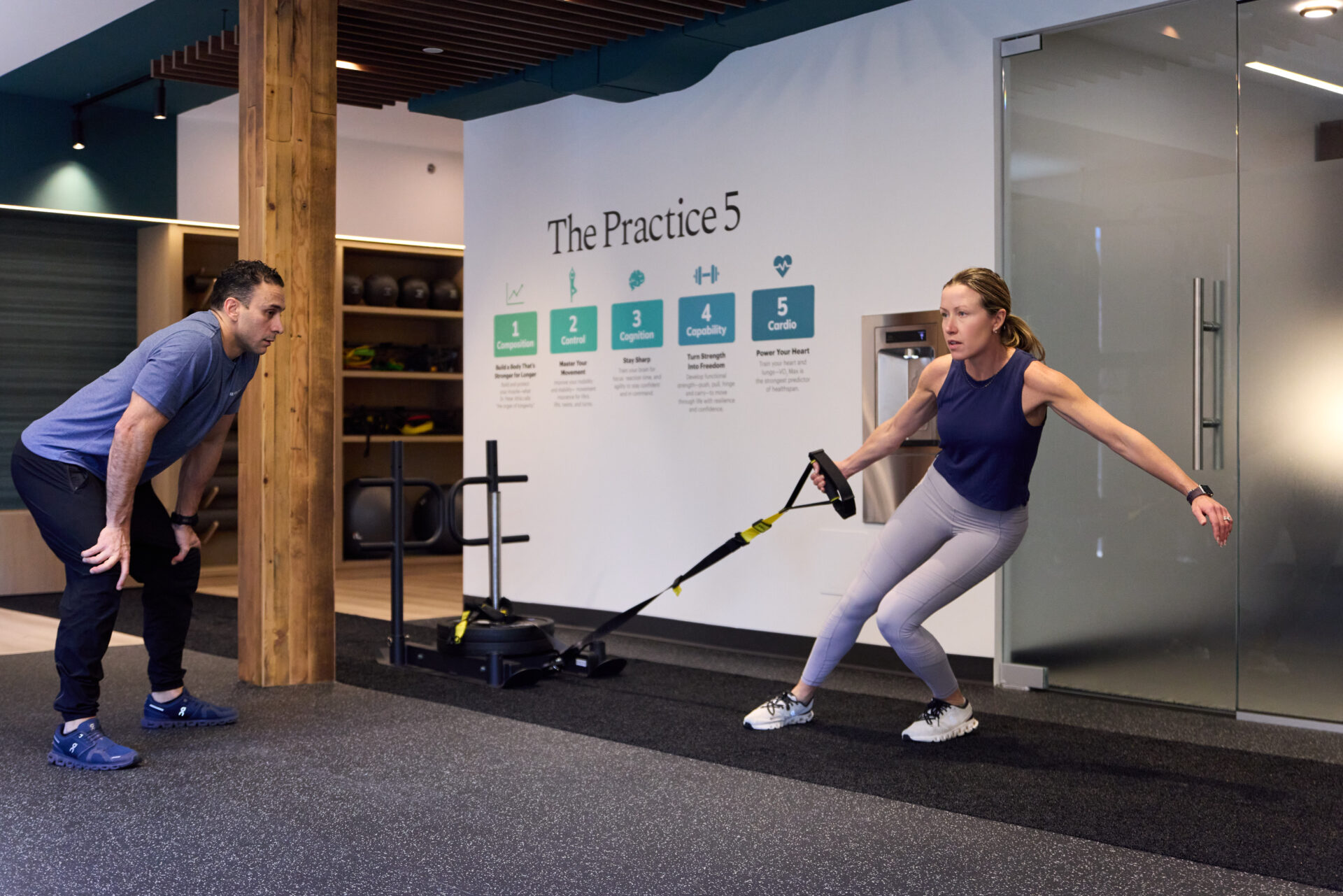
At the core of The Practice is a proprietary framework known as the Practice 5—five domains that together determine how well your body supports the life you want to live: Composition, Control, Cognition, Capability, and Cardio.
What makes the framework compelling is its refusal to let one strength compensate for another. Endurance doesn’t excuse poor balance. Strength doesn’t override lack of control. Physical capacity, here, is treated as a system—because that’s how bodies age in real life. For the first time, I realized I hadn’t been training my whole body. I’d been training the parts that showed up most obviously in my sport.
Why the Focus on “Healthspan” Changes the Equation
The Practice was founded by Alexia Brue, a longtime exercise enthusiast who saw a gap in how traditional fitness classes and personal training address long-term health. After spending the first part of her career in digital media, she turned her attention to building a fitness concept centered on healthspan—helping clients preserve strength, resilience, and independence over decades, not just seasons.
Brue’s inflection point came after reading Outlive: The Science and Art of Longevity by Peter Attia and studying his “Centenarian Decathlon” framework.
“It was the first time I truly understood what age-related decline looks like—and how preventable much of it is,” Brue explains. “Exercise is the most potent longevity intervention we have according to Attia. But only if we train intentionally.”
She realized she had been taking future capability for granted—the assumption that she would always be able to hike, play tennis, and travel independently.
“Attia and other longevity researchers helped me understand that without deliberate intervention, muscle mass and cardiovascular fitness decline predictably with age. Training for healthspan asks a longer-term question: how many years of life can you live with strength, confidence, and autonomy intact?”
It’s a subtle shift—but a consequential one, especially for people who already value fitness and want to practice it with greater intention.
From Effort to Strategy
By the end of the Healthspan Discovery process, I wasn’t fixated on any single number. What had changed was my perspective. I left thinking less about how hard I train—and more about how long I want to keep doing the things I love. For the first time, my fitness felt less like a routine, and more like a plan.
In a town full of people who value longevity—in their work, their families, their lives—it feels fitting that fitness here is evolving, too. Healthspan Discovery at The Practice offers a way to step back, assess where you are, and train with the long view in mind. Not a reset. Just a smarter place to begin.
THE PRACTICE
Habits for Healthspan
The Mill
334 Pemberwick Road
Greenwich, CT
212-929-5667
The New Longevity Playbook
How to turn the latest science into
real-life strategy.
Fireside Conversation Dates
Pause Greenwich x The Practice x Well by Messer
Mocktail bar by Dynasty
6:45PM
January 20 – The New Playbook for Perimenopause
January 27 – The Nutrition & Supplement Playbook for Longevity
February 2 – The New Metabolic Playbook
CLICK HERE FOR DETAILS