
After decades of working with buyers and sellers across Fairfield County, I’d argue Greenwich operates by its own logic. It is one that has less to do with geography and more to do with what serious buyers actually want right now. And what they want, more than square footage or school rankings or acreage or waterfront access, is optionality.
It Doesn’t Have to Be a Full-Time Commitment
The old framing was binary: you lived in Manhattan or you moved to the suburbs. Greenwich has quietly dismantled that choice.
I’ve watched it happen dozens of times. A family buys a Greenwich home primarily as a weekend retreat. The occasional weekends become full summers. The children join a tennis program, a soccer team, and go to sailing camp. Friendships take root. Before long, the family is spending more time in Greenwich than they ever anticipated – not because they planned it that way, but because the lifestyle made the argument for itself.
That gradual migration is a feature, not an accident. Unlike most second-home markets, Greenwich lets families ease into a new chapter rather than forcing an all-or-nothing decision.
What the Post-Pandemic Buyer Migration Actually Revealed
The years following COVID triggered one of the more fascinating buyer dispersals I’ve witnessed. Manhattan families spread outward chasing space, privacy, and that haunting buzzword: distance. For a period, that made perfect sense.
Then offices reopened. Schools resumed. Routines restabilized. And the buyer zip codes started telling a different story. A significant number of families who had gone farther east, whether deeper into Connecticut or out to Eastern Long Island, began looking back toward Greenwich. Not because they wanted less space. Because they wanted more flexibility. They wanted to attend a Wednesday dinner in the city without it being a production. They wanted their children to maintain commitments and friendships without a four-hour round trip. They wanted a home that performed equally well in July and in November.
They also discovered that many of the experiences they once associated exclusively with Manhattan were increasingly available here. Restaurants, retailers, wellness concepts, and services that had built devoted followings in the city were expanding into Greenwich or already there, making it easier to enjoy the lifestyle they loved without feeling like they had to be in Manhattan every day to access it.
What many discovered was that they weren’t looking for distance from their lives; they were looking for a better version of them.
The Underrated Value of Continuity
Real estate conversations default to the measurables: taxes, square footage, commute times, school rankings. What gets undervalued is continuity.
A family moving to Greenwich doesn’t have to dissolve what they’ve built. Children keep their city friendships while adding new ones. Parents keep their professional contacts, their favorite restaurants, and their long-standing routines, while simultaneously building new ones in Greenwich. The Saturday coffee spot. The birthday restaurant. The fitness studio where you keep running into the same people.
Life expands rather than relocates. In most markets, a move feels like a departure. In Greenwich, it tends to feel like an addition.
The Proximity Dividend
Second-home ownership in the Northeast has historically carried a tax: long drives, seasonal traffic, complicated logistics. Greenwich largely eliminates that toll.
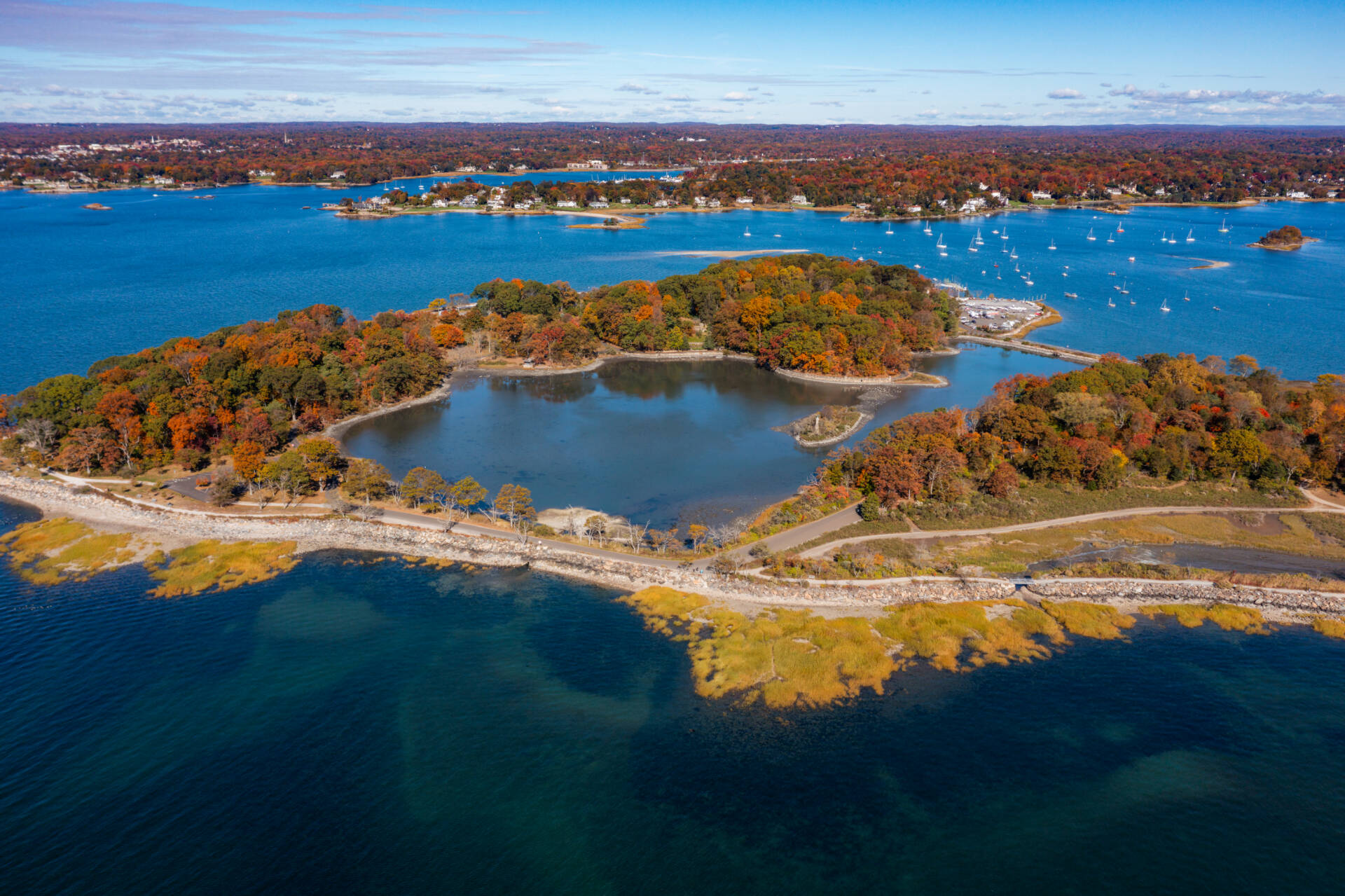
Leave Manhattan on a Saturday morning, and you’re walking Tod’s Point magnificent beach within the hour. No half-day commitment. No mental preparation for highway purgatory. You simply arrive, which changes how often you actually go.
That compression of friction matters enormously. It’s the difference between a property you visit on holidays and one woven into the fabric of your regular life. A spontaneous Sunday escape becomes realistic. A single evening outdoors feels worthwhile. The house stops being a destination and starts being an extension of home.
Not the Hamptons. Something Categorically Different.
Every summer, someone raises the comparison: Greenwich as the new Hamptons.
Greenwich isn’t trying to be the Hamptons — and that’s precisely the point.



It works when school starts. It works during the holidays. It works during a busy work week when you need to be on a 7:52 train. It works when your children are five, and when they’re fifteen, and when they’ve left for college and the house finally belongs to you again.
The value proposition isn’t escape. It’s utility.
The Full Circle: When Greenwich Works in Reverse
Here’s the part of the Greenwich story that rarely gets told because it requires a longer time horizon to see.
For many families, Greenwich was the answer to a particular season of life: young children, growing space requirements, the pull of better schools and backyards. Manhattan made sense before kids; Greenwich made sense with them. And so, thirty years ago, a generation of New Yorkers made the move, built their lives here, and planted themselves.
Then the children left.
What happens next is genuinely interesting. The same flexibility that made Greenwich an ideal entry point for young families makes it an equally intelligent exit ramp for empty-nesters. The spacious Colonial that once housed a family of five suddenly has four empty bedrooms and a lawn that nobody uses. The calculus shifts.
And Greenwich, almost uniquely, allows families to make that transition gracefully. Many downsize within Greenwich itself – trading the large family home for something more edited, more manageable, more theirs. But increasingly, I’m watching another pattern emerge: the full circle. Empty-nesters who return to Manhattan.
Not reluctantly. Enthusiastically!
The city they left thirty years ago – perhaps with some ambivalence, perhaps with genuine grief – has been waiting. And now, freed from school calendars, carpool logistics, travel teams, and the myriad infrastructure requirements of raising children, they return to it on their own terms: a well-positioned apartment, theater subscriptions, dinners without reservations made three weeks in advance.
The Greenwich home, rather than disappearing from the picture, often reverts to the role it played at the beginning: the weekend house, the summer house, the holiday gathering spot, the place you go when you want space and water and quiet. The asset doesn’t lose its value; it shifts its function. And the owners gain back the city they always loved, having lost nothing in the process.
It is, in the most elegant sense, the trade working exactly as designed.
Why Optionality Is the New Luxury
Luxury has been quietly redefined. It used to mean bigger, grander, more. Today’s most sophisticated buyers are after something less tangible and considerably harder to find: flexibility.
The ability to work remotely or commute when it matters. To spend weekends away without logistical suffering. To maintain one life while gradually building another. To transition on your timeline rather than anyone else’s.
Greenwich excels in all of it at every stage. For some families it’s a weekend house. For others, a summer house. For many, it ultimately becomes the primary home. For a fortunate few, it becomes all three things across the course of a lifetime.
What makes Greenwich so compelling isn’t that it forces a choice; it’s that it keeps giving you better ones.