
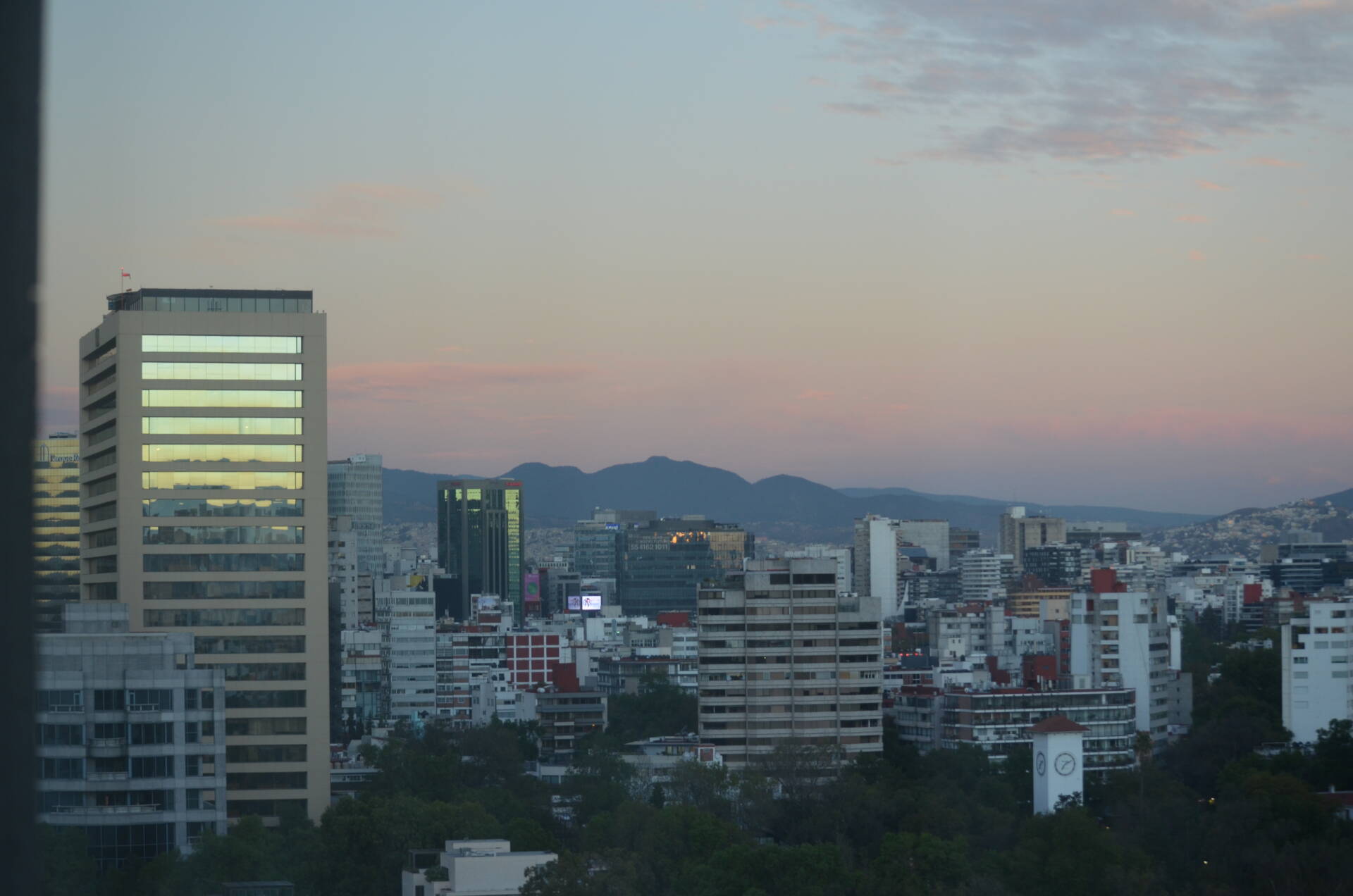
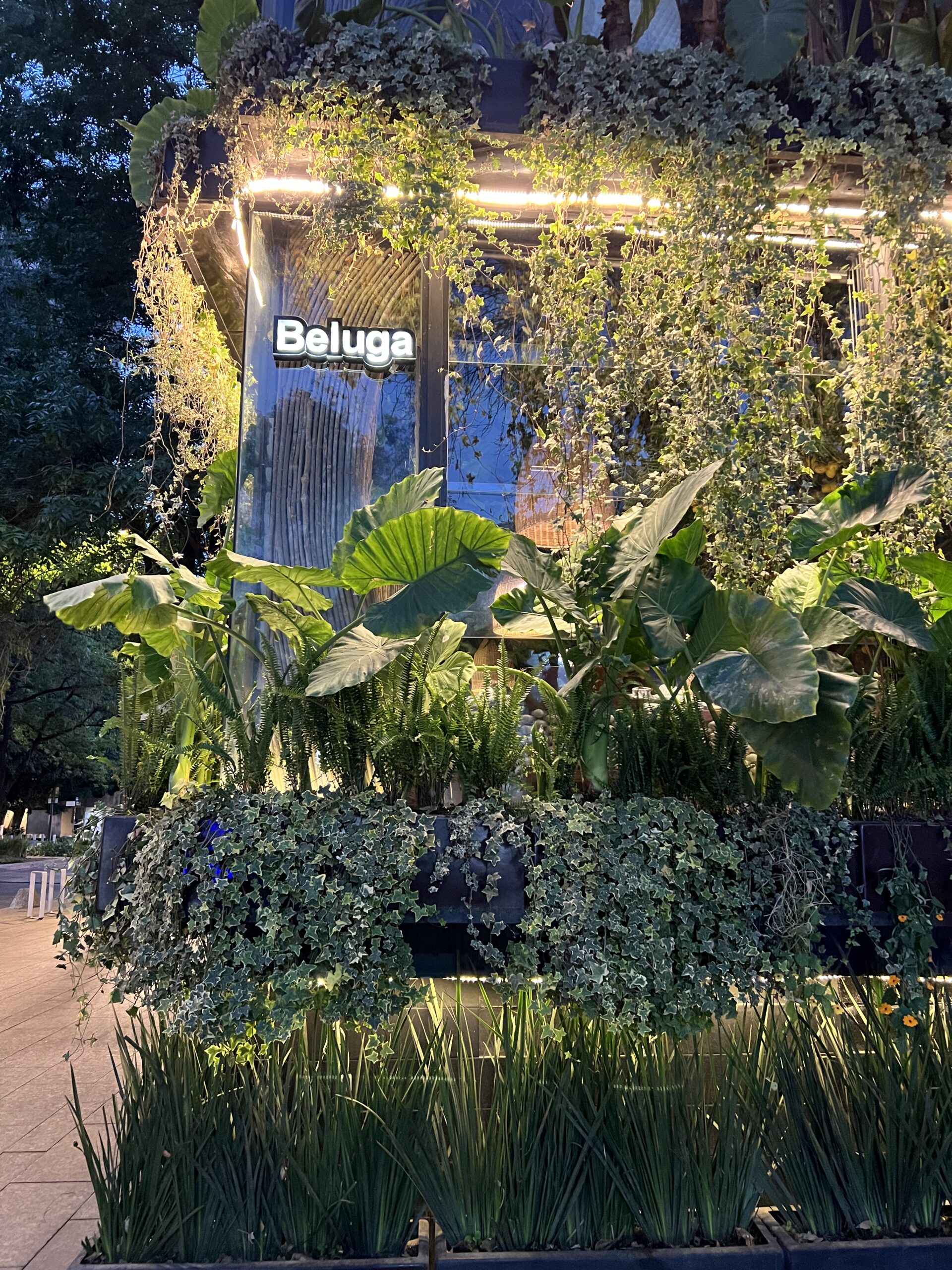
An easy direct flight from JFK, customs and immigration moved surprisingly quickly, and an elderly Uber driver named Ignacio seamlessly delivered us to our hotel in Polanco, one of Mexico City’s most elegant neighborhoods. Think leafy boulevards, polished restaurants, and streets filled with tropical plants the size of small trees. We started off the trip with a bang as we enjoyed a bottle of champagne alongside a spectacular and tasty dinner at Raíz, which offers creative contemporary Mexican cuisine with inventive presentations. There are some dishes with insects on the menu –order the grasshopper tostada if you are feeling adventurous, which we were!
Best of Day: the sudden explosion of color after winter
Worst of the Day: what I will now refer to as a Mexican-champagne migraine (and perhaps the effect of high altitude).
Breakfast, Mangoes, and the Art of Wandering
One of the easiest ways to orient yourself in the city is simply to walk. Mexico City’s neighborhoods each have distinct personalities: Polanco for upscale calm, Roma Norte and Condesa for leafy streets and cafés, and the historic center for grand colonial architecture.
We wandered into a packed neighborhood café named Saks that is
clearly popular among the locals. A delicious and abundant brunch spread began with fruit, including the most extraordinary mango I have ever eaten. It was so juicy and intensely flavored that it may have permanently ruined all other mangoes for me.
Travel tips: If you see a simple fruit plate on a breakfast menu in Mexico City, order it. Every Sunday from 8 a.m. to 2 p.m., Mexico City closes major streets to vehicular traffic, turning them into car-free spaces for biking, running, and skating (bikes are available for rent along the route). The primary, most popular street is Paseo de la Reforma, which runs through the heart of the city.
Best of the Day: the life-altering mango
Worst of the Day: a brief and slightly depressing visit to Chapultepec Zoo – if you find yourself wandering through the Bosque de Chapultepec, skip the zoo and go to the Botanical Garden (Jardín Botánico) instead.
Insects, Mole, and Culinary Adventuring
Food became the central theme of the week. Mexico City is known as a foodie paradise, and its dining scene ranges from casual neighborhood spots to some of the most celebrated restaurants in the world.
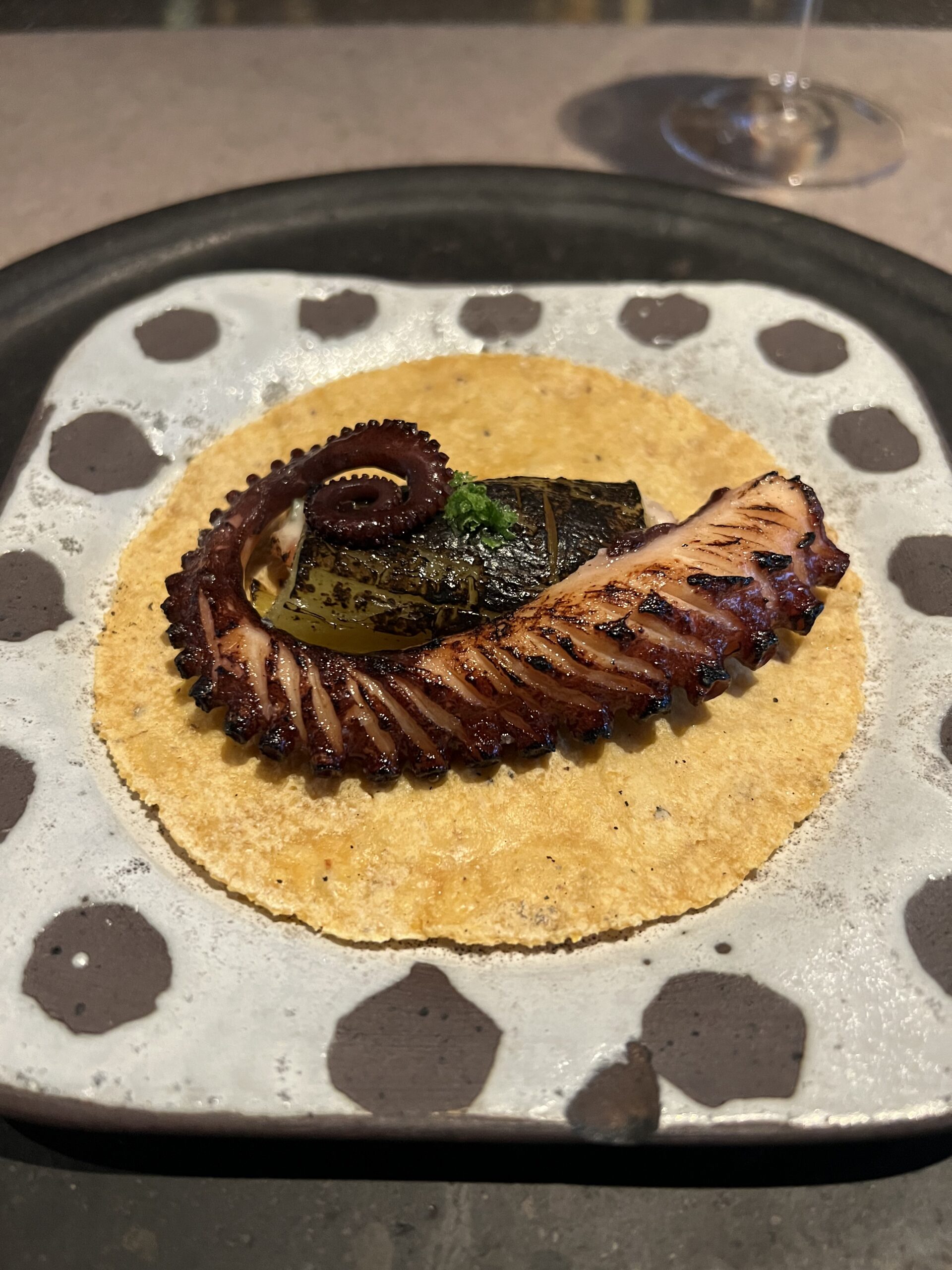
As mentioned before, one of our first dinners at Raíz featured chapulines (grasshoppers) and escamoles (ant larvae). Both were excellent: tasty, savory, and far less intimidating than they sound. Later in the week we ate at several standout restaurants, including Quintonil and Pujol, which each hold two Michelin stars, and bring different interpretations of modern Mexican cuisine over multi-hour tasting menus. At the more experimental fine-dining restaurants, insect ingredients appeared again—but in subtle form. Powders and spices made from things like grasshoppers or even stink bugs were incorporated so seamlessly that you would never guess what you were eating unless someone told you.
Mexico City also provided us with an education on mole, the famously complex sauce whose name comes from the Nahuatl word molli, meaning mixture. A traditional mole can contain dozens of ingredients—chilies, spices, nuts, seeds, and sometimes chocolate—and can take days to prepare properly. After encountering it repeatedly throughout the week, I can confirm two things: mole is extraordinary, and there is a personal limit to how much mole one human can consume.
Sunrise at Teotihuacán
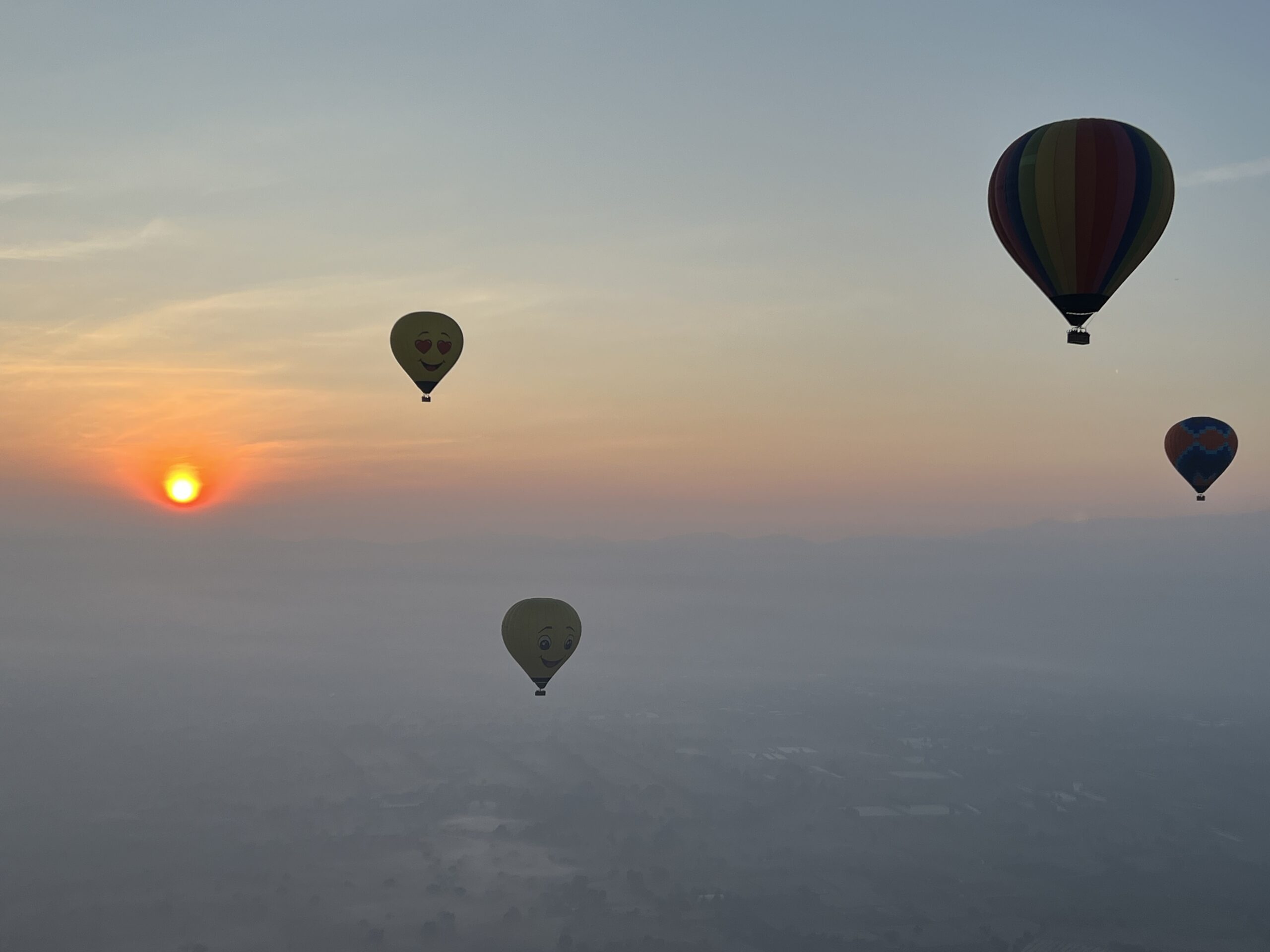
One morning began at the extremely unreasonable hour of 4 a.m. for a trip to Teotihuacán, the enormous ancient pyramid complex about an hour outside the city. The plan was to watch sunrise over the pyramids from a hot-air balloon. After a bumpy pre-dawn shuttle ride, we arrived at the launch site where fires burned in metal barrels and a few stray dogs wandered around looking hopeful.
Watching the balloon inflate in the half-light was mesmerizing. Once airborne, the flight was so gentle you barely noticed leaving the ground. Unfortunately, thick fog blanketed the valley. We could see other balloons and the rising sun, but the pyramids themselves remained hidden, though the shapes of the mountains did reveal themselves eventually during the latter half of the flight.
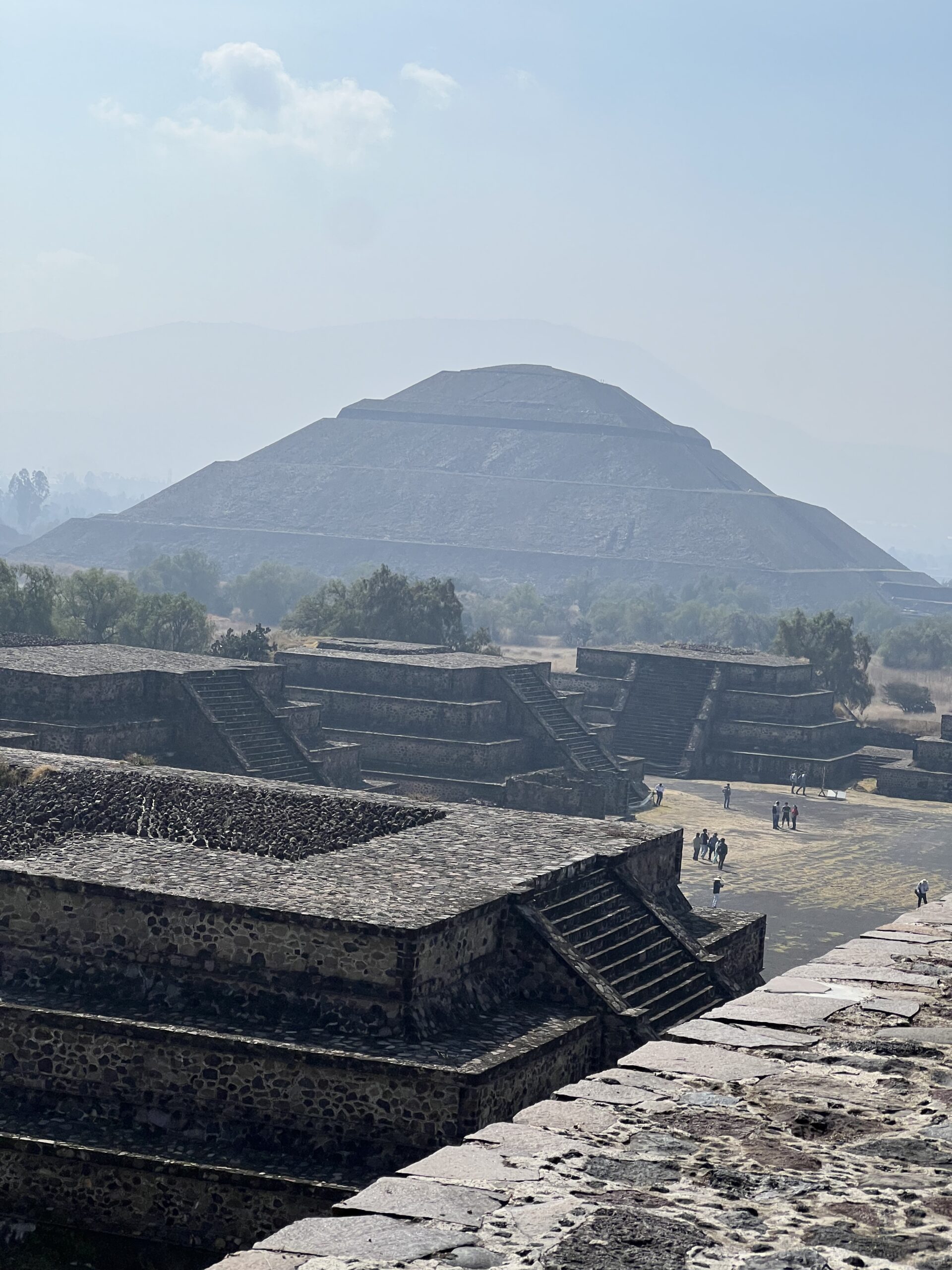
Later, walking through the archaeological site, we finally saw the pyramids clearly and climbed partway up one of the massive stone structures. We learned that Teotihuacán actually predates the Aztecs by roughly a thousand years. When the Aztecs arrived, they discovered the abandoned city and had no idea who built it—a mystery archaeologists are still trying to solve (several central Mexican groups have been proposed, but there is no consensus).
Travel tip: Visitor access rules at Teotihuacán change over time, so it’s worth checking current climbing restrictions before you go.
Best of the Day: floating quietly in a hot-air balloon – we used the company Globo Tetris. There are several good, reputable options, make sure to read reviews and verify safety records!
Worst of the Day: a bathroom situation involving barely functioning plumbing
Coffee, Architecture, and the Witch House
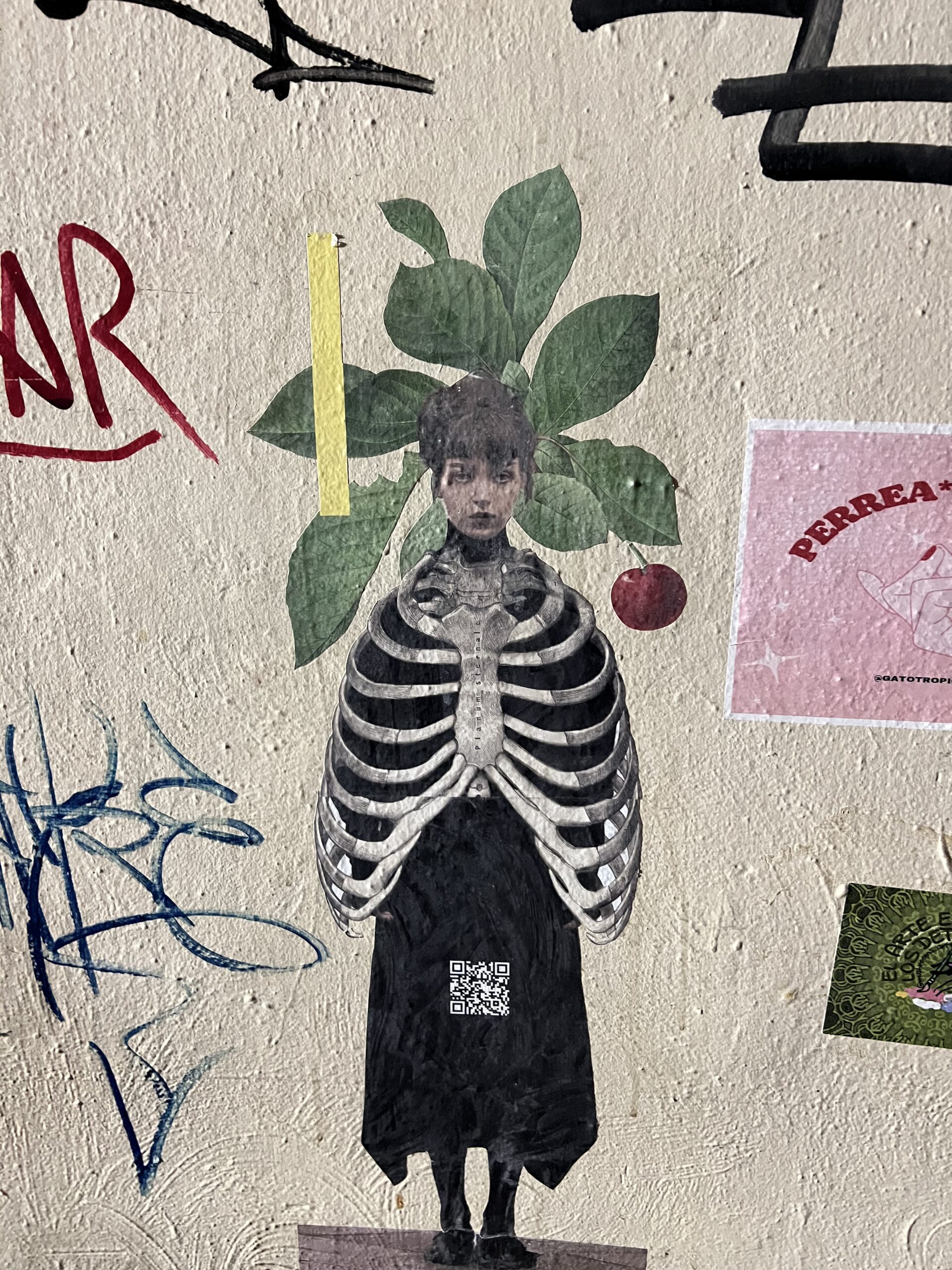
Back in the city, we joined a four-and-a-half-hour food tour through Roma Norte, one of Mexico City’s most charming neighborhoods. The area is known for its eclectic architecture, mixing French-inspired buildings with art nouveau facades and colorful modern structures and hand-painted murals.
Our guide pointed out Casa de las Brujas, or the “Witch House,” a landmark in Roma Norte surrounded by local legends and paranormal lore. According to local legend, she performed rituals there to summon Montezuma. Whether or not the story is true, the building itself is unforgettable—and a reminder that Mexico City’s history is full of strange and fascinating layers.
Travel tip: I would highly recommend doing a food tour (and Roma Norte is a great neighborhood in which to do one – we found several highly rated options via Tripadvisor), but, if I had a do-over, I would skip the mole-and-mezcal tasting unless you’re really into mezcal!
Best of the Day: passion-fruit cold brew
Worst of the Day: being politely pressured into drinking mezcal at a tasting neither of us really wanted
The Monarch Butterfly Odyssey
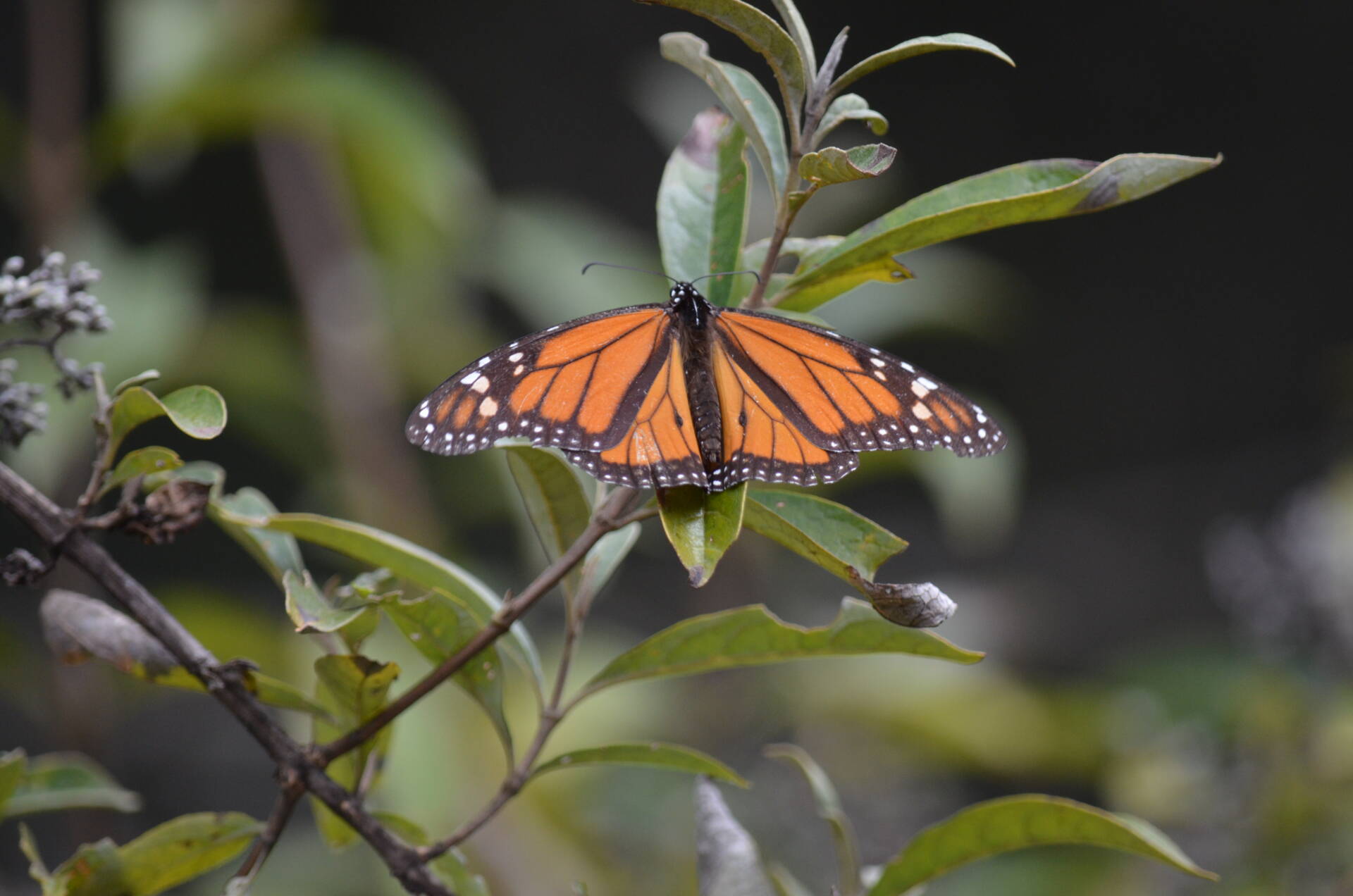
The most memorable day of the trip was a visit to the Monarch Butterfly Biosphere Reserve, where millions of monarch butterflies migrate each winter. After a bumpy journey, we finally reached the sanctuary.
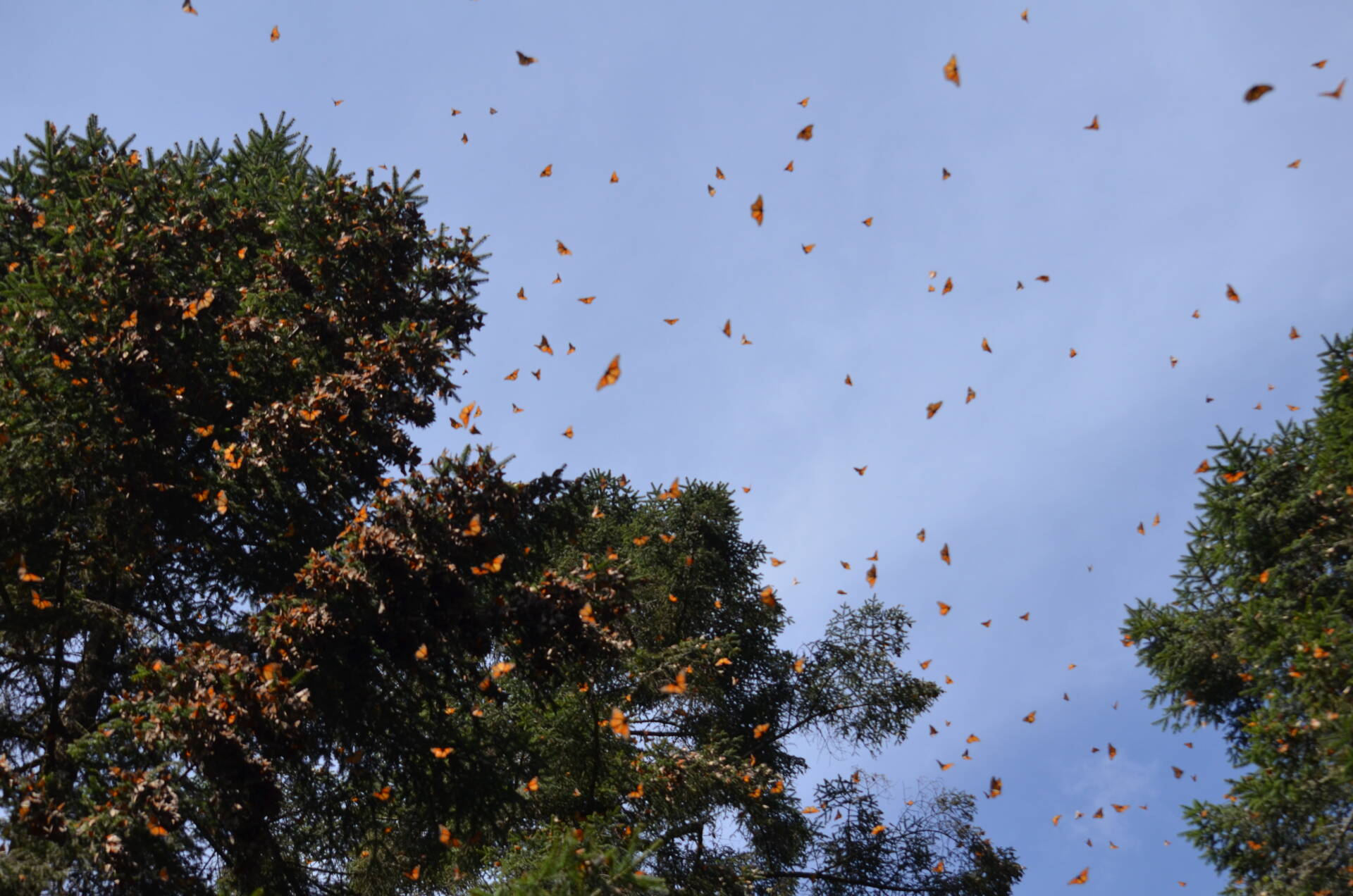
The hike led into a mountain forest where monarch butterflies cluster together during the winter. Because the day was cool, many were resting in dense groups hanging from tree branches—huge layered structures of orange and black wings. As the sun emerged, butterflies filled the air everywhere—drifting through the trees, landing on flowers, circling above the forest. The ground was scattered with delicate orange wings from butterflies that had completed their migration.
It was quiet, surreal, a true magical spectacle of nature. What makes this even more extraordinary is that these monarchs have traveled up to 3,000 miles from the United States and Canada, completing one of the longest migrations of any insect on Earth.
Travel tip: The monarch butterflies that winter in central Mexico gather in the Monarch Butterfly Biosphere Reserve, a UNESCO World Heritage Site spanning the mountains of Michoacán and the State of Mexico, 2–4 hours from Mexico City, depending on the sanctuary. The two most commonly visited reserves are El Rosario and Sierra Chincua in Michoacán, along with Piedra Herrada in the State of Mexico. The migration season runs roughly November through March. The best viewing period is typically January and February, when millions of butterflies cluster in the forest and warm daytime temperatures bring them into the air. On cooler or cloudy days, they tend to rest in dense groups hanging from tree branches, which is spectacular on its own. Aim to go on a weekday for the fewest crowds. It is worth booking your guide/tour group in advance in order to ensure it will be a reputable company. It is key to speak a common language with your guide, so they can give you detailed information about the Monarchs and the migration.

Places to Eat and Stay in Mexico City
Hotels
The Wild Oscar (Polanco) – a boutique hotel in Polanco, well placed for restaurants and walking.
Las Alcobas (Polanco) – a luxury boutique hotel on or near the Masaryk corridor in Polanco.
Casa Polanco – a small design-forward hotel overlooking Parque Lincoln in Polanco.
Restaurants Worth Planning Around
Quintonil – one of Mexico City’s most acclaimed fine-dining restaurants.
Pujol – one of the city’s best-known destination restaurants in Polanco.
Raíz – a Michelin Bib Gourmand restaurant in Polanco focused on contemporary Mexican cooking.
Caracol de Mar – a Michelin Bib Gourmand seafood-focused restaurant in Condesa.
Saks Polanco – a popular breakfast/brunch option in Polanco.
Reservations are recommended for most of these restaurants, especially Quintonil and Pujol.
________________________________________
Practical Tips for Visiting Mexico City
Stay in walkable neighborhoods. Polanco, Roma Norte, and Condesa are particularly pleasant for visitors. For getting from place to place, such as the airport to your hotel, I recommend Uber over taxis to avoid getting taken advantage of on pricing.
Plan meals in advance. Mexico City’s dining scene is world-class, and many of the best restaurants book out days or weeks ahead.
Give yourself time outside the city. Teotihuacán and the Monarch Butterfly Biosphere Reserve are both unforgettable experiences.
Expect the unexpected. Mexico City is full of delightful surprises—from extraordinary fruit to butterflies filling an entire forest.